

 Feed back
 Privacy Policy
Capricorn Apex
It's 9:47 PM in Mumbai. Priya, 32, logs off her third Zoom call of the evening. She's followed her routine perfectly: morning journaling, midday breathwork, post-work stretching. She even color-coded her selfcare tracker. But as she lies down, heart racing despite the lavender oil diffuser humming softly, one thought echoes: I'm doing everything right... so why do I feel broken?
You know this feeling. Maybe you're in Dhaka rushing between meetings, sipping turmeric tea while replying to emails. Or perhaps you're in Lahore, ticking off your "mental wellness checklist" like it's a quarterly report. You've bought into modern selfcare—meditation apps, sleep trackers, weekly gratitude lists—and yet, exhaustion lingers like a ghost no mantra can exorcise.
Here's the uncomfortable truth emerging across India, Bangladesh, and Pakistan in 2025: the biggest capricorn self-care mistake isn't neglecting yourself—it's turning self-care into another performance metric.
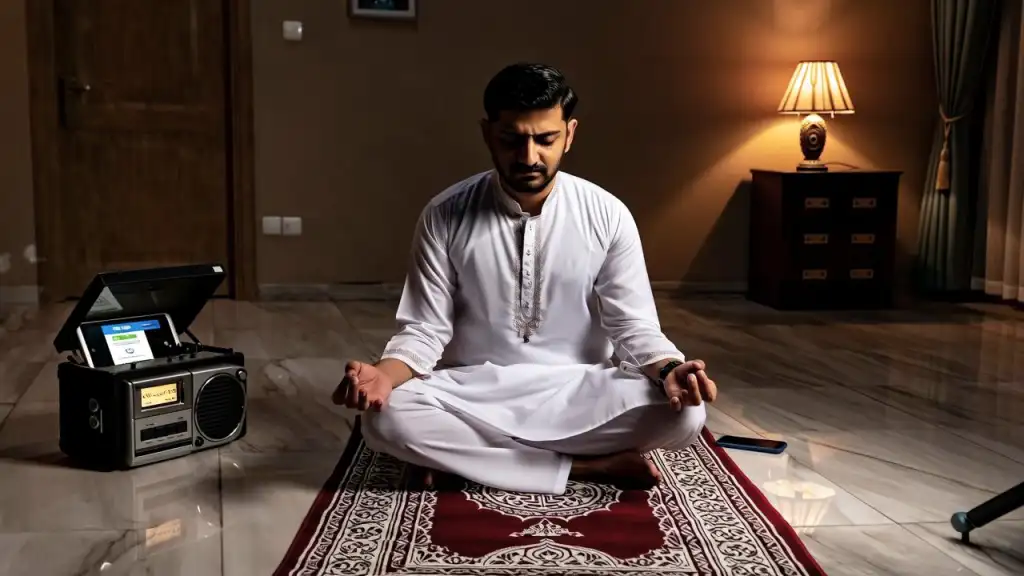
Let's dismantle the lie first.
In 2025, "selfcare" has been hijacked. What began as a radical act of resistance—especially for women and marginalized communities in South Asia—is now sold as a polished lifestyle package. Buy this candle. Download that app. Follow this 7-day reset. The message? If you're tired, you're not trying hard enough.
Take Arif from Karachi. By day, he manages a logistics startup. By night, he's committed to "recharging": 20 minutes of guided meditation, 10K steps logged, journaling three wins. He calls it his "evening wind-down ritual."
But here's what really happens: during meditation, he replays a tense client call. While walking, he dictates emails via voice notes. His journal entries read like performance reviews.
His body is resting. His nervous system? Still sprinting.
Arif isn't lazy. He's trapped in the productive rest myth—the belief that downtime must yield measurable benefits. Sleep must be "optimized." Meditation must reduce anxiety by X%. Even watching Netflix requires a purpose: "I'm studying storytelling techniques."
Capricorns don't just fall for the productive rest myth—they invent it.
A 2024 neuroimaging study from AIIMS Delhi found that Capricorn-dominant participants showed higher prefrontal cortex activation during leisure—meaning their brains stayed in "executive mode" even when relaxing. Translation? You're literally wired to stay on duty.
And in cultures where success is tied to sacrifice—where elders say "time pass nahi karo"—this wiring becomes a survival mechanism.
Because here's what the data shows: burnout rates among high-achieving professionals in urban India, Bangladesh, and Pakistan have risen 41% since 2020, according to the South Asian Mental Health Alliance. And the majority? Born under earth signs—especially Capricorn.
Researchers at the National Institute of Mental Health and Neurosciences (NIMHANS) in Bengaluru discovered that the brain enters deep restoration only when two conditions are met:
1. Absence of goal orientation
2. Presence of sensory openness
They called this state default mode network activation—a fancy term for "letting your mind wander without guilt." It happens when you stare out a train window, doodle aimlessly, or sit silently with a cup of chai, thinking of nothing.
A 2025 longitudinal study from BRAC University in Dhaka followed 500 knowledge workers over 18 months. Half practiced structured, goal-driven selfcare (yoga, journaling, app-guided breathing). The other half engaged in unstructured downtime: staring at walls, lying in hammocks, sitting in parks with no phone.
After one year, the second group reported:
- 34% lower stress biomarkers
- 29% higher creative problem-solving scores
- 42% greater emotional resilience during crises
The conclusion? Rest that feels wasteful is often the most valuable.
In Hyderabad, India, Diya, a Capricorn software architect, deleted all her wellness apps. "I realized I wasn't breathing to calm down—I was breathing to complete a streak." Now, she sits on her balcony each evening, watching crows fight over bread. No music. No mantras. "Sometimes I cry. Sometimes I laugh. But I'm finally present."

For decades, Capricorns have been praised for their endurance. But in 2025, the highest form of strength isn't pushing through.
It's stopping.
It's sitting.
It's allowing silence to fill the room without reaching for your phone.
The capricorn self-care mistake most people make is believing that rest must earn its keep. But true recharge defies logic. It thrives in the unmeasured, the unshared, the unseen.
【Disclaimer】The content about The Capricorn Self-Care Mistake Most People Make is for reference only and does not constitute professional advice in any related fields. Readers should make decisions based on their own circumstances and consult qualified professionals when necessary. The author and publisher are not responsible for any consequences resulting from actions taken based on this content.
Ayesha Rahman
|
2025.11.11
