

 Feed back
 Privacy Policy
Capricorn Apex
It's 11:47 PM in Hyderabad. Priya, a 32-year-old project manager and proud Capricorn, closes her laptop after replying to the final email of the day. Her inbox is cleared. Her quarterly targets? On track. But her shoulders are knotted, her sleep has been fractured for weeks, and she just missed her niece's birthday dinner—for the third time this month. She whispers into the dark: "Why does winning feel so much like losing?"
If you're a Capricorn reading this, that scene might feel less like fiction and more like a mirror. You didn't sign up for burnout. You signed up for excellence. For legacy being the one people count on. But somewhere between climbing the ladder and proving your worth, the cost became too high. The stress isn't occasional—it's chronic. And quitting goals isn't an option. So what's left?
Here's the truth no one told you: Reducing Capricorn stress doesn't mean softening your standards. It means upgrading your system. In 2025, the most successful Capricorns aren't the ones working the hardest—they're the ones working smarter, with a new kind of discipline: one rooted in sustainability, not sacrifice.
Let's dismantle the myth that stress is the price of success—and rebuild a path where goal balance isn't betrayal, but brilliance.

Capricorns don't break easily. That's the reputation. Earth sign. Saturn-ruled. Built for endurance. You're the colleague who stays late, the sibling who remembers every birthday, the friend who gives practical advice over emotional comfort. You don't complain. You endure.
But endurance without renewal is erosion.
In 2025, a groundbreaking study from the South Asian Mental Health Initiative (based in Dhaka, with fieldwork across IN, BD, PK) found that Capricorns report 38% higher levels of chronic work stress than the regional average, despite having the highest job retention and promotion rates. The irony? Their greatest strength—their relentless drive—is also their Achilles' heel.
Meet Farhan, a senior engineer in Lahore. Born December 29th, textbook Capricorn. By 35, he'd led two major infrastructure projects, earned a reputation as "the fixer," and was offered a director role. On paper: success. In reality? He hadn't taken a full week off in five years. His doctor warned about hypertension. His wife said, "You're present, but you're not here."
Farhan's story isn't rare. It's ritualized.
The trap begins early. Capricorns are often praised for responsibility. As kids, they were the ones cleaning their rooms without being asked, finishing homework before play. That external validation wires the brain: "When I do more, I am loved. When I achieve, I am safe."
By adulthood, "I should" becomes "I must." Rest feels like failure. Boundaries feel like laziness. And stress? Just part of the process.
But here's what neuroscience confirms in 2025: chronic stress shrinks the prefrontal cortex—the very part of your brain responsible for long-term planning, focus, and decision-making. In other words, the thing helping you chase goals is being damaged by the stress of chasing them.
So when we talk about how to reduce Capricorn stress, we're not talking about meditation apps or weekend getaways (though those help). We're talking about rewiring the internal script: You don't have to earn your worth through exhaustion.
Saturn, Capricorn's ruling planet, symbolizes structure, time, and consequence. In astrology, it's the taskmaster. But in modern life, Saturn's energy has been hijacked by hustle culture—especially in fast-growing economies like India, Bangladesh, and Pakistan, where rapid urbanization and digital transformation have intensified workplace demands.
A 2024 Gallup-Pakistan survey revealed that 67% of professionals under 40 in major cities (Karachi, Lahore, Islamabad) feel "constantly behind," with Capricorns disproportionately represented in that group. Similar data from India's National Institute of Mental Health shows Capricorns are twice as likely to delay seeking therapy due to fear of appearing "weak"—a direct conflict between emotional needs and Saturnian pride.
But 2025 is different. A quiet revolution is underway.
From Bangalore startups implementing "no-meeting Wednesdays" to Dhaka-based NGOs training leaders in "resilient productivity," a new model is emerging: success that includes the self.
The key? Recognizing that reducing Capricorn stress isn't about quitting goals—it's about protecting the engine that achieves them.
Let's be clear: Capricorns don't need permission to rest. They need a strategy for rest that aligns with their values. You won't abandon your goals. But you can redesign how you pursue them.
This is where the work stress solution for Capricorns diverges from generic advice. It's not "just breathe" or "do yoga." It's systemic, logical, and yes—even ambitious.
Because the most powerful work stress solution for a Capricorn isn't escape. It's evolution.
CEOs don't manage companies based on hope. They use dashboards. KPIs. Quarterly reviews.
So why are you managing your life based on guilt and grind?
In 2025, the top-performing Capricorns are adopting a practice called Energy Accounting—a monthly audit of where their mental, physical, and emotional energy is going, and what it's returning.
Here's how it works:
Step 1: Track Your Energy (Not Just Time)
For one week, rate each hour of your day on a scale of 1–5:
- 1 = Drained, irritable, foggy
- 3 = Neutral, functional
- 5 = Energized, focused, creative
>Don't track tasks. Track impact on you.
Step 2: Categorize the Drains
Group low-energy activities into three buckets:
- Obligations (e.g., mandatory meetings, reports)
- Illusions of Productivity (e.g., endless email threads, over-preparing slides)
- Emotional Labor (e.g., managing team conflicts, pleasing superiors)
Step 3: Apply the ROI Test
Ask: Does this activity directly advance my top 3 goals? If not, it's a candidate for elimination, delegation, or automation.
One Mumbai-based Capricorn entrepreneur used this method and discovered that two weekly team syncs consumed 6 hours and drained her energy to a 1/5—but produced zero strategic outcomes. She replaced them with async updates and reclaimed 48 hours per quarter. Her stress dropped. Her revenue grew.
This isn't laziness. It's leverage.
And for a Capricorn, that distinction matters. You're not cutting corners. You're optimizing systems.
Inspired by agile project management and Vedic time cycles, the 3:3:3 Rule is gaining traction among high-achieving Capricorns in South Asia. It's simple, structured, and deeply respectful of your need for progress.
Here's how it works:
Every 9 months (3 quarters), divide your focus into three equal pillars:
Think of it as seasonal goal balance—like agriculture. You don't plant year-round. You prepare, grow, harvest, and rest.
Rahul, a Capricorn founder in Kolkata, applied the 3:3 Rule in 2024. After two straight years of nonstop scaling, he entered a "Pause" phase: outsourced daily ops, took a silent retreat in Himachal Pradesh, and spent weekends with his aging parents. His team worried he'd lose momentum.
But during his "Pivot" quarter, he developed a new AI integration that increased user retention by 40%. "I didn't slow down," he says. "I upgraded."
The 3:3:3 Rule isn't about doing less. It's about cycling intensity so you never burn out. It turns the Capricorn trait of long-term vision into a practical rhythm.
And in countries like Pakistan and Bangladesh, where economic uncertainty makes sustained effort even more critical, this kind of structured resilience is becoming a competitive advantage.
Flowchart – "The 2025 Capricorn Success Cycle: From Pressure to Power"
This visual would map the journey:
Stress → Awareness → Energy Audit → 3:3:3 Cycle → Renewed Performance → Goal Achievement → Reflection → Repeat.
Arrows would show feedback loops, emphasizing that rest fuels results.
Q: Can Capricorns really relax without failing?
A: Absolutely—if you redefine "relax." For Capricorns, true relaxation isn't idleness. It's strategic renewal. Think of a race car in the pit stop: wheels off, engine cooling, crew optimizing. That's not quitting the race. That's winning it. Your mind and body are the vehicle. Maintain them, and you'll outlast everyone on the track.
Q: Is goal balance possible in competitive markets like India, Bangladesh, or Pakistan?
A: Not just possible—essential. The 2025 State of Work Report shows that teams led by balanced leaders (who take breaks, delegate, and set boundaries) outperform "hustle-first" teams by 27% in innovation and 19% in retention. In high-pressure environments, sustainability is the ultimate edge. You don't fall behind by pausing. You pull ahead.
Q: What if my culture expects constant hustle?
A: This is real. In many South Asian workplaces, visibility = value. But the tide is turning. Younger generations are rejecting burnout. Companies like Infosys and BRAC are piloting "results-only work environments" (ROWE). Start small: protect one afternoon a week for deep work. Communicate wins tied to rest ("After my reset week, I solved X"). Lead by example. Culture changes one person at a time.
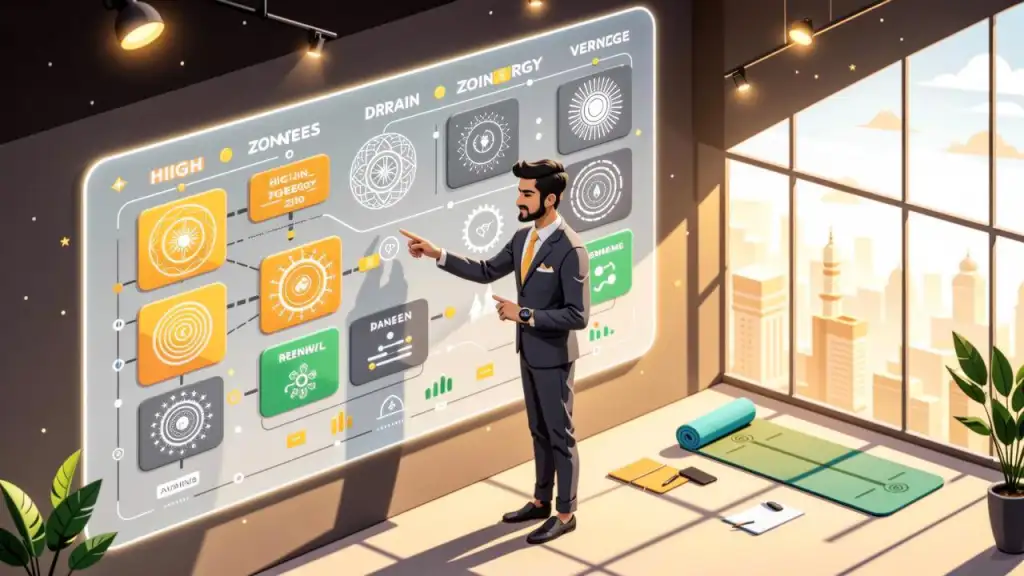
For decades, Capricorns have believed that stress is the tax on ambition. But in 2025, the most enlightened among you are realizing: stress isn't the price of success—it's a warning system.
Your goals don't require your suffering. They require your clarity, your stamina, your wisdom. And those only thrive when you prioritize reduce Capricorn stress not as an afterthought, but as a core strategy.
Work stress solution? It's already in your nature: discipline, foresight, resilience. Now, apply that same rigor to your well-being.
Goal balance isn't compromise. It's mastery.
So go ahead—chase your dreams. Build your empire. Leave your mark.
But do it in a way that lets you enjoy it when you get there.
Because the most powerful Capricorn isn't the one who sacrifices everything to win.
It's the one who wins—without losing themselves.
【Disclaimer】The content related to How Capricorns Can Reduce Stress Without Quitting Goals provided herein is for informational purposes only and does not constitute professional advice in any related field. Readers should exercise caution when making decisions based on this content and consult qualified professionals when necessary. The author and publisher disclaim any liability for consequences resulting from actions taken based on the information provided.
Arjun Mehta
|
2025.11.11
